

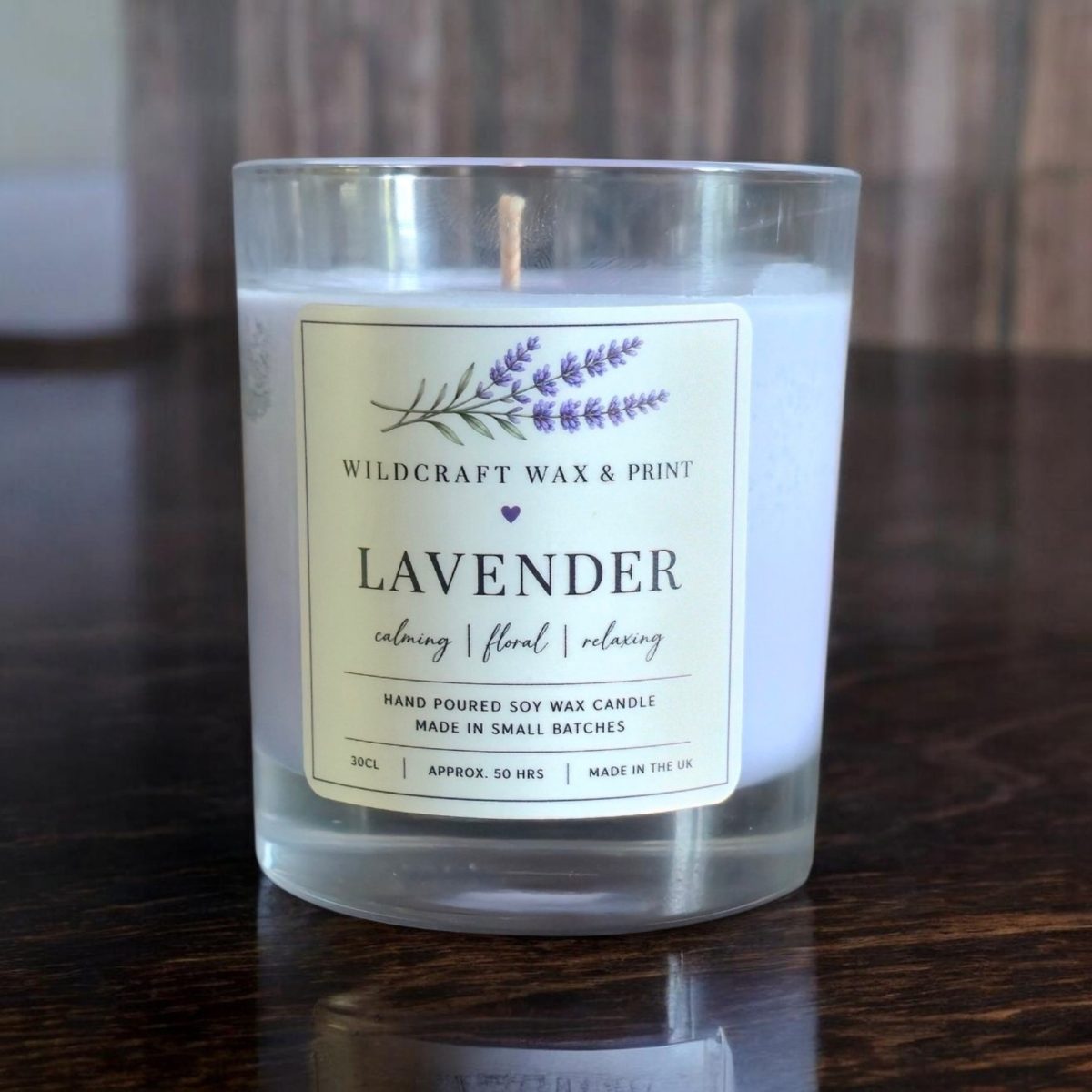
A good candle should burn evenly from the first light to the last centimetre of wax. When one tunnels down the middle, smokes or floods its own wick, it is nearly always down to how it was burned, not how it was made. The good news is that a few habits fix almost everything, and they apply to wax melts too.
Always read the label on the base first. Handmade candles and wax melts carry safety warnings and, where the fragrance needs it, an ingredient warning for people with sensitive skin. The maker’s instructions come before anything here.
The first burn matters most
Wax has a memory. The first time you light a candle, let it burn until the melted wax reaches the edge of the container all the way round. As a rough guide, that is about an hour for every 2.5cm (an inch) across the top, so two to three hours for a typical jar candle.
If you blow it out after twenty minutes, the wax only melts in a small circle around the wick. Next time it will melt to the same circle and no further, and the candle starts to tunnel, leaving a thick wall of wasted wax down the sides.
So light a new candle when you will be in the room for a few hours, not ten minutes before you go out.
Every time you light it
- Trim the wick to about 5mm before each burn. A long wick makes a big, flickering flame, black smoke and a mushroom-shaped carbon blob on the wick. Wooden wicks need less: about 3mm.
- Burn for no more than four hours at a time. After that the wick can get too long and the container too hot.
- Keep it out of draughts, away from open windows, fans and doorways. A draught makes the flame flicker, smoke and burn unevenly.
- Put it on a heat-resistant surface, away from curtains, shelves and anything that can catch.
- Never leave a burning candle unattended, or where children or pets can reach it.
- Stop when there is about 1cm of wax left. Below that, the base of the container can get hot enough to crack or scorch the surface underneath.
Putting it out
Blowing out a candle sends hot wax splashing and leaves a trail of smoke. A snuffer is better, or use a wick dipper to push the wick into the melted wax and straighten it again. Either way you get no smoke, and the wick is primed for next time. Do not use water: it can make hot wax spit and crack the glass.
How to fix a tunnelling candle
If a candle has already tunnelled, you can usually rescue it:
- Wrap a piece of kitchen foil around the top of the container, leaving a hole in the middle about the size of the tunnel.
- Light the wick. The foil reflects heat onto the wall of hard wax around the edge.
- Leave it for an hour or two, checking it, until the surface is level and fully melted.
- Take the foil off carefully (it will be hot) and let the candle set.
Smoke, soot and a flame that will not settle
- Black smoke or soot on the glass: the wick is too long, or there is a draught. Trim it and move the candle.
- A tiny flame that drowns: the wick is too short or sitting in too much wax. Pour a little melted wax off (into kitchen roll, not the sink) and let it burn for a while.
- Crackling: normal for wooden wicks, and part of the charm.
Wax melts
Wax melts give you the scent without a flame on the wax itself. A few things to know:
- Use a proper burner, either a tealight burner or an electric one, and follow the burner’s instructions.
- Do not add water to the dish. Melts are designed to melt on their own.
- Use one or two cubes at a time. Overfilling can spill when it melts and wastes scent.
- Replace the wax when the scent fades, not when it has gone. The wax does not burn away; it is the fragrance that runs out, usually after several melts.
- To change the wax, let it set, then pop it out. If it is stubborn, put the dish in the freezer for ten minutes and it usually lifts out in one piece.
- Never leave a tealight burner unattended, and blow the tealight out before you go to bed.
A note on pets and fragrance
Some fragrance and essential oils are not good for pets, particularly birds and cats. Burn candles and melts in a well-ventilated room, keep them away from where pets sleep, and ask the maker about the fragrance if you are unsure.
Storing candles and melts
Keep them somewhere cool and dark, with the lid on if they have one. Sunlight fades colour and heat can soften the wax, and fragrance lasts longer when it is covered.
Shop handmade candles and wax melts
Hand-poured by makers across the UK. The rows refresh as stock changes.
Candles




Wax melts


Burners and holders


Why is my candle tunnelling?
Usually because the first burn was too short. Wax remembers the size of its first melt pool, so if it was blown out before the melted wax reached the edges, it will keep melting to that smaller circle. A foil collar around the top for an hour or two usually fixes it.
How long should you burn a candle the first time?
Until the melted wax reaches the edge of the container all the way round. As a rough guide, about an hour for every 2.5cm across the top.
How short should I trim a candle wick?
About 5mm before each burn for a cotton wick, and about 3mm for a wooden wick.
How long do wax melts last?
The wax itself does not burn away. The fragrance fades after several melts, and that is the time to replace it.
Can I leave a wax melt burner on overnight?
No. Never leave a tealight burner unattended, and switch electric burners off when you leave the room or go to bed unless the manufacturer says otherwise.